02 July 2026
This preliminary assessment of invasive plant species in Kosovo was prepared based on data from scientific literature, relevant national publications, and data from the University of Prishtina, Department of Biology, as well as research and field observations.
Its purpose is to identify, document, and systematize invasive plant species present in the territory of Kosovo, as well as to assess their distribution, habitats, and impact on biodiversity, natural ecosystems, and economic activities.
This assessment aims to contribute to improving the database on invasive species and to support the planning of measures for their prevention, control, and management. The assessment was conducted by the Institute for Nature Protection, in cooperation with the Department of Biology of the University of Prishtina, and is intended to serve as a basis for further scientific studies, long-term monitoring, and the development of policies for the management of invasive species.
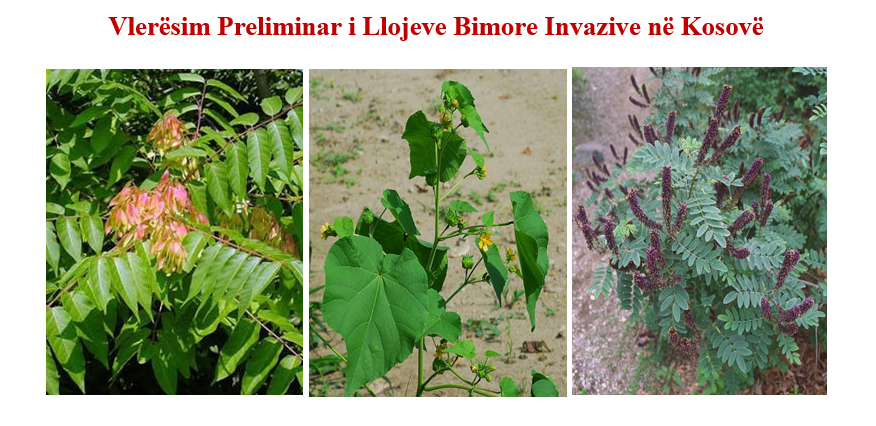
Invasive plant species are non-native species that have spread beyond their natural range and, after becoming established in new environments, may cause significant ecological, economic, and social impacts. In Kosovo, their presence has increased in recent decades as a result of human activities, infrastructure development, trade, transport, and climate change.
The results show that invasive plant species are widespread across a wide range of habitats, including riverbanks, agricultural land, pastures, forests, urban areas, degraded areas, and road and railway corridors. These habitats create favorable conditions for their spread, particularly in areas where ecosystems are disturbed or degraded.
Many of these species have a high reproductive and dispersal capacity, competing with native flora for space, light, water, and nutrients. As a result, they may cause a reduction in plant diversity, changes in the structure and functioning of ecosystems, degradation of natural habitats, and the loss of native species. In addition to ecological impacts, some invasive species may also have consequences for agriculture, forestry, human health, and the economy.
Compared with previous studies, an increase in knowledge regarding the distribution of certain invasive species in Kosovo has been identified. However, gaps still remain in the data concerning the spread, population dynamics, and ecological impact of many species. Therefore, continuous monitoring, further scientific research, and interinstitutional cooperation are needed to identify new invasive species in a timely manner and to undertake effective measures for their prevention, control, and management.
This assessment represents an important step towards establishing a sustainable database on invasive plant species in Kosovo and contributes to the implementation of national policies for biodiversity conservation, the protection of natural habitats, and the sustainable management of natural resources.
For more information, see the Preliminary Assessment of Invasive Plant Species in Kosovo.