25 August 2026
This study was conducted as part of a project coordinated by the Italian organization Tetide APS and supported by the International Union of Speleology.
The main objective of the project was to investigate and assess the distribution of the invasive species Procambarus clarkii (Louisiana red crayfish) in karst and underground systems, with the aim of protecting local biodiversity and developing measures for the management and protection of sensitive habitats.
Another objective was to promote the exchange of experiences and good practices, with the aim of continuously improving monitoring and control strategies. The project also contributed to promoting the exploration, study, and protection of caves and karst systems.
The project not only aimed to contribute to the conservation of underground ecosystems, but also provided a unique opportunity for educational, technical, and scientific cooperation among the participating countries, involving biodiversity experts, biologists, and scientific institutions.
Procambarus clarkii is considered one of the most problematic invasive species in Europe because it competes with native freshwater crayfish species; damages aquatic habitats by burrowing into riverbanks; transmits crayfish plague (Aphanomyces astaci), which is highly destructive to native European crayfish; and negatively affects biodiversity, agriculture, and water infrastructure.
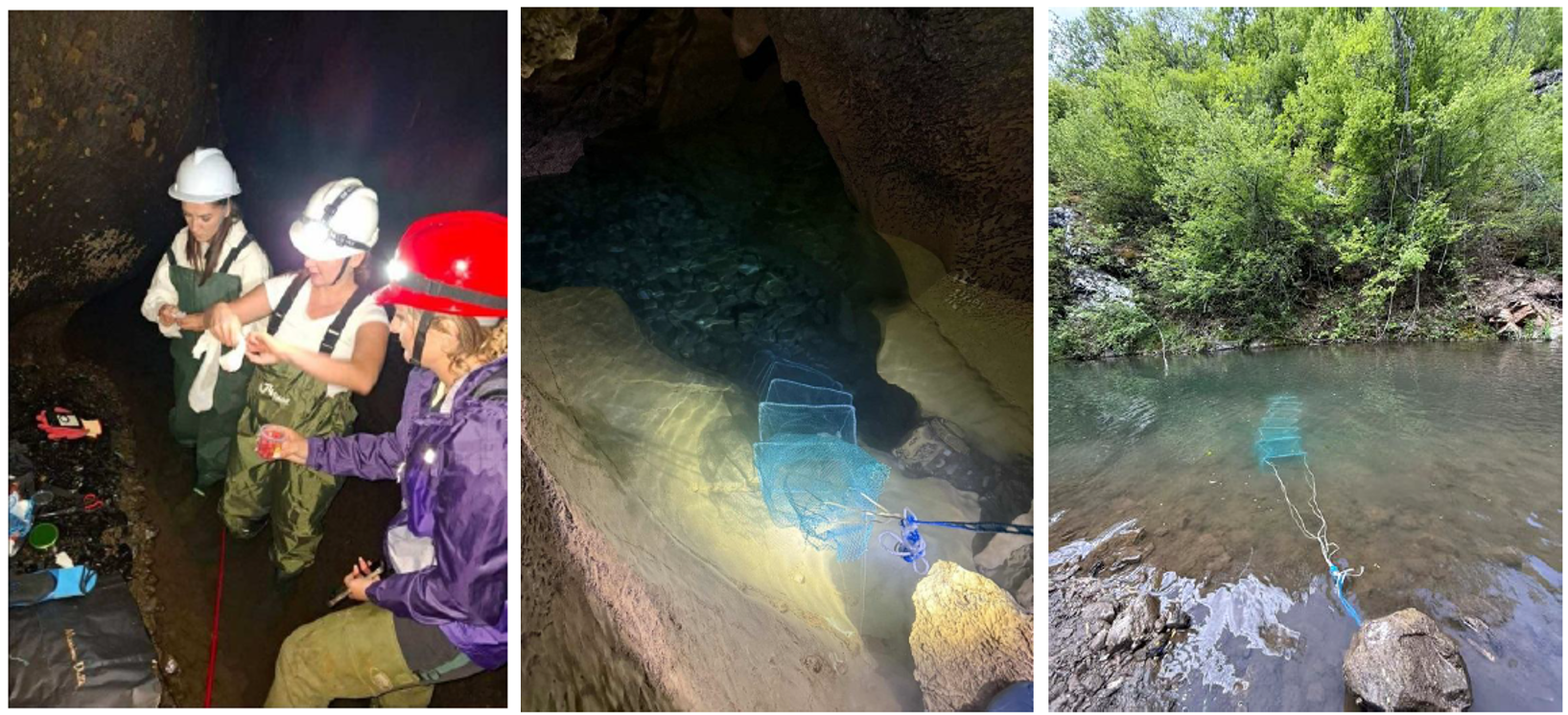
During the monitoring period carried out at the three locations included in the study — Panorc Cave, Radac Cave, and the area above Lake Perlepnicë — no presence of the Louisiana red crayfish was recorded.
In Panorc Cave, monitoring was conducted during September 2025 in an area with relatively easy access, with a local road nearby and a habitat assessed as clean.
In Radac Cave, activities were conducted during October 2025 under more difficult access conditions, in a spring area characterized as clean. Meanwhile, in the area above Lake Perlepnicë, monitoring was carried out in spring, specifically in May 2026, which revealed visible pollution in the field, but no presence of the invasive species was recorded.
Based on the data collected through field research, the presence of this invasive species has not been confirmed at the monitored locations in Kosovo up to this stage of the study. However, since the research was limited to only a few sampling points, continued monitoring is necessary for a more comprehensive assessment of the species’ potential distribution and habitat conditions in groundwater and surface waters.
For more details, see the Preliminary Study on the Distribution of the Invasive Species Procambarus clarkii in Groundwater in Kosovo.